Saree & Lehenga Draping in Navi Mumbai
Draping is included with every bridal booking at no extra charge. Whether you’re wearing a Kanjeevaram silk, a nauvari, a Banarasi lehenga, or a simple chiffon saree, I drape it properly so it sits perfectly, stays secure through the entire event, and looks beautiful from every angle.
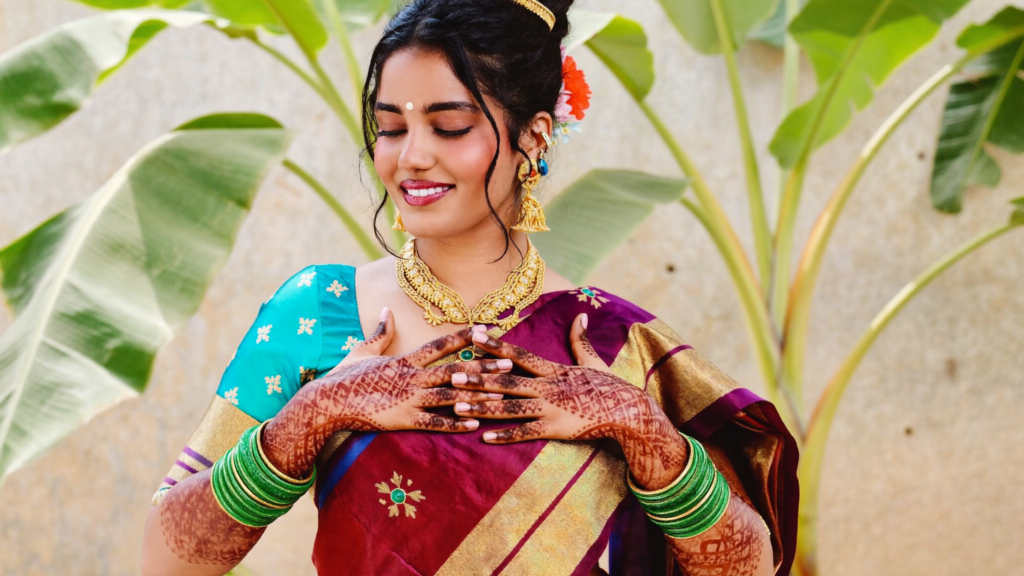
Saree Draping Styles I Do for Brides
Every bride’s outfit is different, and the draping needs to match the style, the fabric, and the occasion. Here are the saree draping styles I do regularly for brides in Navi Mumbai:
Nivi style: The most common Indian draping. Clean pleats at the front, pallu draped over the left shoulder. I do this for most North Indian, Maharashtrian (non-nauvari), and general bridal looks. The key is getting the pleats even, the pallu length right, and pinning everything securely so it doesn’t shift during the ceremony.
Nauvari (Maharashtrian): The traditional nine-yard draping for Maharashtrian brides. I drape it in the Peshwai style with clean, structured pleats and a comfortable fit so you can walk, sit, and perform all rituals without the saree coming undone. Nauvari draping takes more time than nivi because the fabric is longer and the technique is more complex.
Kanjeevaram / South Indian: Heavy silk sarees with stiff borders need a specific approach. I ensure the pleats fall cleanly despite the weight, the border shows properly, and the pallu displays the design. For South Indian brides, I also set the jasmine and temple jewellery as part of the draping process.
Bengali style: The pallu comes from the right shoulder instead of the left, with the fabric draped across the front in a distinctive way. I do this for Bengali brides who want the traditional look for their wedding ceremony.
Gujarati style: The pallu comes from the back to the front over the right shoulder, displaying the saree’s design prominently. Common for Gujarati and Rajasthani brides.
Lehenga Draping and Dupatta Styling
Lehenga draping is more than just putting on a skirt. The dupatta styling is what makes or breaks the look. Here’s what I do for lehenga brides:
I set the lehenga at the right height (not too high, not too low) and make sure the flare is even all around. Then I drape the dupatta based on the look you want. Some brides want the dupatta draped over the head for the ceremony. Others want it pinned at the shoulder and flowing behind. Some want a double dupatta look with one over the head and one at the shoulder.
For bridal lehengas, I pin the dupatta with hidden pins so it stays in place during pheras and doesn’t slip when you move. I also make sure the dupatta doesn’t cover the lehenga’s embroidery. The whole point of a bridal lehenga is the work on the fabric, and the draping should show it off, not hide it.
For sangeet and reception lehengas, the dupatta style is usually more relaxed. I can drape it casually over one arm, pinned at the waist, or even styled like a cape for a modern look.
Draping for Different Body Types
The way a saree or lehenga is draped can make a real difference in how it photographs and how you feel wearing it. I adjust the draping based on your body type:
For brides who want to look slimmer, I place the pleats slightly to the side rather than dead centre, keep the pallu length longer to create a vertical line, and ensure the fabric sits smoothly around the waist without bunching.
For shorter brides, I set the saree or lehenga at a slightly lower waist point and keep the pleats narrow so the legs look longer. The pallu length is adjusted so it doesn’t overwhelm a shorter frame.
For plus-size brides, I make sure the fabric is draped smoothly without pulling or creating awkward folds. The pleat placement and pallu width are adjusted to flatter the silhouette. The goal is always comfort and confidence.
Why Draping is Included, Not Charged Separately
Some makeup artists charge extra for draping. I don’t. It’s part of the complete bridal experience. When I do your makeup, I need to see the full look to make sure the makeup, the hairstyle, and the outfit all work together. Draping is not an add-on. It’s part of creating a complete, cohesive bridal look.
I also bring all the draping essentials: safety pins, brooches, fabric tape, and hidden clips. You don’t need to arrange anything separately.
What’s Included in Every Booking
Draping comes standard with every bridal look:
Areas I Cover
I’m based in Nerul East and I travel with my full draping kit to your venue anywhere in Navi Mumbai. I’ve draped sarees and lehengas at weddings, engagement ceremonies, and receptions across Vashi, Kharghar, Belapur, Panvel, and other parts of Navi Mumbai.
Frequently Asked Questions
Is saree draping included in the makeup booking?
Yes. Saree draping, lehenga draping, and dupatta styling are all included in every booking at no extra charge. I bring all the draping essentials (safety pins, brooches, fabric tape, hidden clips) so you don’t need to arrange anything separately. It’s part of creating a complete bridal look.
What saree draping styles do you know?
Nivi (standard North Indian), nauvari (Maharashtrian Peshwai), Kanjeevaram/South Indian, Bengali, Gujarati, and modern/fusion styles. I also do lehenga dupatta draping in multiple styles: over the head, at the shoulder, double dupatta, and modern cape style. If you have a specific draping reference or photo, share it with me before the event and I’ll replicate it.
Will the draping stay in place through the whole ceremony?
Yes. I use a combination of safety pins, hidden clips, fabric tape, and strategic pinning so the draping stays secure through pheras, dance performances, hugs, and all the movement of an Indian wedding. I also check and adjust the draping before key ceremony moments if needed. I’ve draped heavy Kanjeevaram silks and nauvari sarees that have held perfectly through 10+ hour weddings.
Can you drape a saree to make me look slimmer?
Yes. I adjust pleat placement, pallu length, and fabric positioning based on your body type. For a slimmer look, I place pleats slightly to the side, keep the pallu longer to create a vertical line, and ensure the fabric sits smoothly without bunching. For shorter brides, I adjust the waist point and pleat width to elongate the frame. We can try different approaches during the trial.
How do you drape a lehenga dupatta for a bride?
I set the lehenga at the right height, even out the flare, and then drape the dupatta based on your preference: over the head for the ceremony, pinned at the shoulder and flowing behind, or double dupatta style. Everything is pinned with hidden clips so it stays put during pheras. I also make sure the dupatta doesn’t cover the lehenga’s embroidery or design work.
Should I bring my saree to the trial?
If possible, yes. Bringing the saree or lehenga to the trial lets us test the draping style, see how the fabric falls, and make sure the overall look (makeup + hair + draping) works together. If you can’t bring it, send me photos of the outfit and I’ll plan the draping in advance.
Book Your Complete Bridal Look
Draping is included with every booking. Share your wedding date and outfit details, and I’ll plan the complete look: makeup, hair, and draping together.