What Makeup Techniques Work Best for Indian Skin Tones?
Indian skin tones range from fair ivory to deep mahogany, each with distinct undertones that change how every product looks once applied. The techniques that work for a European complexion often do not translate directly to Indian skin. Undertones are warmer, pigmentation patterns are different, and the way light interacts with melanin-rich skin requires a different approach to contouring, colour correction, and product selection. I work on Indian skin every single day, across this entire spectrum, and this is what I have learned works.
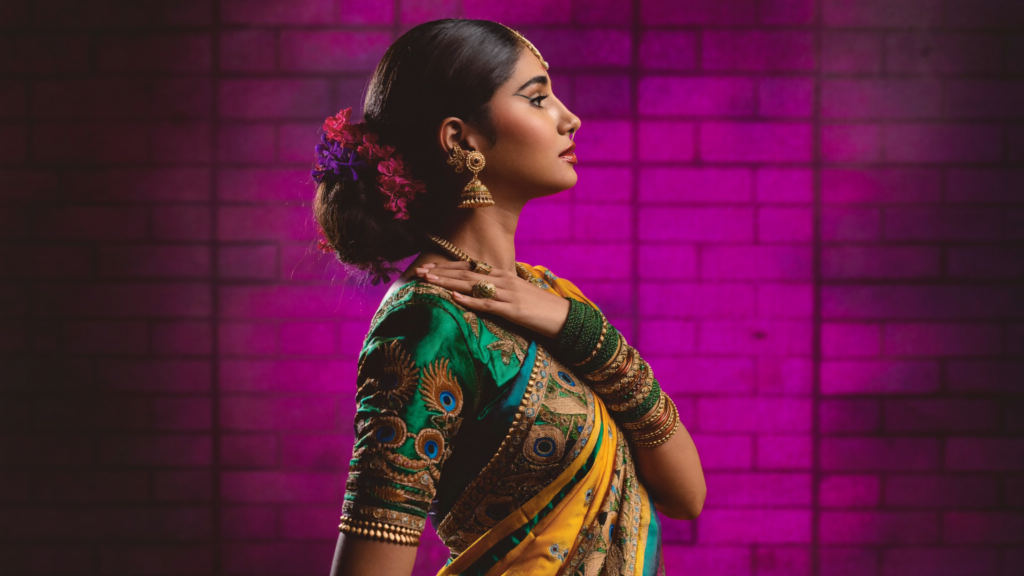
Quick answer: Indian skin is mostly warm-toned, so the techniques that work best are colour correction before concealer, thin layers of yellow or golden-based foundation, cream blushes in peach and coral, warm metallic eye tones, and gold or champagne highlighters. Avoid grey-leaning contours, icy white highlighters and any foundation that is even slightly too light.
Getting married in or around Navi Mumbai? I do half-face bridal trials free so you can test everything on your own skin before you decide. WhatsApp me to book a trial →
Understanding Indian Skin Undertones
Before any technique matters, you need to understand undertones. Indian skin is overwhelmingly warm-toned, but there are important variations within that spectrum. Getting this wrong means your foundation will look grey, your contour will look muddy, and your blush will disappear.
Warm undertones are the most common in Indian skin. You will see yellow, golden, or olive hints when you look at the inner wrist or the side of the neck. Most of my brides in Navi Mumbai fall into this category. Foundation with yellow or golden bases works best here.
Cool undertones are less common but exist, particularly in lighter Indian skin tones. You will see pink or reddish hints. These brides suit foundations with peach or neutral bases.
Neutral undertones sit between warm and cool. The skin does not lean strongly in either direction. These are the easiest to work with because a wider range of products will match.
The technique I use to determine undertone during a bridal trial is to swatch three foundation shades on the jawline (one warm, one cool, one neutral) and check which one disappears into the skin under natural light. The shade that becomes invisible is the correct undertone match. I never match foundation to the wrist or hand because Indian skin often has a different tone on the extremities compared to the face and neck. If you want to test shades on your own skin first, my free half-face trial is the place to do it.
Colour Correction: The Technique Most People Skip
Colour correction is the single most important technique for Indian skin that most non-professional tutorials underestimate. Indian skin commonly has hyperpigmentation around the mouth, under the eyes, along the nasal folds, and on the forehead. Piling on more concealer to cover these areas creates a thick, cakey look. Colour correction neutralises the discolouration first, so you need far less concealer on top.
For medium to deep Indian skin tones: I use a peach or orange colour corrector under the eyes and around the mouth. The orange pigment neutralises the blue-purple darkness that shows through melanin-rich skin. This is the most common correction I do. A peach corrector is too light for deeper skin, so I switch to a deeper orange or even a red-orange for very deep complexions.
For lighter Indian skin tones: I use a peach or salmon-toned corrector. Yellow correctors also work well on lighter skin to neutralise mild redness or uneven patches.
For redness (acne scarring, rosacea): A green colour corrector applied only to the red areas before foundation. I use this sparingly because green corrector can leave an ashy cast on Indian skin if overapplied.
The technique is to apply the corrector only where needed, not all over the face. I use a small flat brush and press the product into the skin rather than swiping, which moves it off the dark areas. Then I let it sit for 30 seconds before applying foundation on top. This layering method means the correction stays put and the foundation can be kept light.
Foundation: Less is More on Indian Skin
The biggest mistake I see on Indian brides who have had their makeup done elsewhere is a foundation that is too light. There is a persistent tendency to match foundation one or two shades lighter than the actual skin tone, creating a visible contrast between the face and the neck. On Indian skin, this reads as grey or ashy in photographs. My bridal makeup in Navi Mumbai page shows how I put the whole look together.
Match to the neck, not the face. I always swatch foundation on the jawline where it meets the neck. The correct shade should blend seamlessly across both areas. If anything, I go slightly warmer rather than lighter.
Build coverage in thin layers. Indian skin has natural warmth and texture that looks beautiful in photos when it is allowed to show through. I apply foundation in thin layers using a damp beauty sponge, building coverage only where needed (typically the centre of the face, around the nose, and on the chin) rather than plastering a single thick layer everywhere. This technique preserves the skin’s natural dimension.
Avoid SPF in bridal foundation. Many Indian brides use daily sunscreen religiously (which is great for pre-wedding skincare), but SPF in foundation causes white flashback under photography flash. For the wedding day, I apply sunscreen as part of skin prep and then use an SPF-free foundation. This avoids the ghostly white cast in flash photos that I have seen ruin otherwise beautiful bridal images.
Satin or soft-matte finishes work best. A fully matte foundation can look flat on Indian skin, especially in photographs, because it removes the natural warmth and luminosity. A fully dewy foundation can look oily in Mumbai’s humidity. A satin finish sits in the middle, which is why I favour it for most bridal work.
Contouring and Bronzing: Warmth, Not Grey
Contouring on Indian skin requires a fundamentally different product selection than what most YouTube tutorials recommend. Cool-toned grey-brown contour shades that look sculpted on fair European skin create a dirty, muddy effect on warm Indian complexions. This is the most common contouring mistake I correct during trials.
Use warm-toned contour products. I contour with shades that have a warm brown or caramel base. On medium Indian skin, NARS Laguna Bronzer gives a natural shadow effect. On deeper skin, I use a shade with chocolate or coffee undertones. The contour should mimic a natural shadow, not a grey stripe.
Placement matters more than intensity. On Indian skin, I focus contouring on the hollows of the cheeks, the temples, and the sides of the nose. I keep it soft on the jawline because Indian bridal photos are often taken from straight-on or slightly below (during pheras, for example), and heavy jawline contour from those angles looks unnatural.
Blend extensively. I blend contour for at least 60 seconds per area using a fluffy brush in circular motions. On Indian skin, the line between “sculpted” and “dirty” is thin, and proper blending is the only thing that keeps you on the right side.
Blush: The Most Underused Technique
Blush is often an afterthought in Indian bridal makeup, but it is one of the most effective techniques for making the face look alive and healthy in photographs. Without blush, a fully made-up face can look flat and one-dimensional, especially under artificial lighting.
Fair Indian skin: Soft pink, peach, or coral shades. These add a natural flush without overwhelming the light complexion. I avoid anything too bright or pigmented.
Medium Indian skin (wheat to golden): This is the most common skin tone I work on. Warm peach, rose, and coral shades work beautifully. Dusty rose is a shade I reach for frequently because it flatters almost every medium-toned bride.
Deep Indian skin: Rich berry, plum, warm orange, or deep coral. On deeper complexions, blush needs enough pigment to actually show through the foundation. Lighter pinks and peaches tend to look ashy or disappear entirely.
Cream over powder for a natural finish. For bridal work, I prefer cream blush applied before setting powder. It blends into the base and looks like a natural flush from within the skin, rather than sitting on top. Rare Beauty Soft Pinch Liquid Blush is a product I use frequently because the pigment is intense enough that a tiny amount gives a believable flush, and it melts into the foundation seamlessly.
Eye Makeup: Warm Metallics Over Cool Silvers
Indian skin tones glow with warm-toned eyeshadows. This is one of the easiest and most impactful technique shifts to make. Cool silver and icy-toned shadows that look editorial on fair skin can wash out Indian complexions or make the eye area look grey.
Best eyeshadow families for Indian skin: Golds, bronzes, coppers, warm browns, rose golds, terracottas, burgundies, and deep plums. These shades complement the natural warmth in Indian skin and make the eyes look rich and defined rather than flat.
For daytime or natural looks: I use soft matte browns in the crease and a wash of champagne or pale gold on the lid. This gives subtle definition without heaviness.
For bridal or evening looks: Metallic golds and bronzes on the lid with a deep burgundy or warm brown in the crease create the classic Indian bridal eye that photographs stunningly. I often add a pop of copper or rose gold on the centre of the lid to catch light.
Kohl and kajal placement: Kohl-lined eyes are a defining feature of Indian bridal makeup. I apply waterproof kohl along the upper and lower waterline and then smudge slightly along the lower lash line with a small brush for a soft, smoky effect. For brides who find full kohl too heavy, I tightline only the upper waterline. This defines the eyes without visible liner.
Always use an eye primer. Indian eyelids tend to be oily, which causes eyeshadow to crease and fade within hours. A dedicated eye primer applied before any shadow keeps the colour vibrant and crease-free for 10+ hours. This is non-negotiable for bridal work.
Highlighter: Gold and Champagne, Not Icy White
Highlighter on Indian skin should enhance the natural warmth, not add a frosty or icy sheen. White or silver-based highlighters create a chalky stripe on warm Indian complexions. The effect looks artificial in photos.
Gold highlighter works on medium to deep Indian skin tones. It catches light naturally and looks like the skin itself is glowing.
Champagne highlighter works on fair to medium skin tones. It adds a soft, warm luminosity without looking too metallic.
Placement technique: I apply highlighter on the high points of the cheekbones, the bridge of the nose, the brow bone, and the cupid’s bow. For bridal work, I keep it subtle on the forehead and nose to avoid a shiny, sweaty look in Mumbai’s humidity. The cheekbone is where I concentrate the most product because that is where light naturally hits the face and where photographers typically direct their lighting.
Lip Colours: What Works Across the Spectrum
Indian skin tones can carry an incredible range of lip colours, from soft nudes to deep berries. The key is matching the lip shade to both the skin tone and the occasion.
Fair Indian skin: Nude pinks, soft corals, peach tones. For bridal, a warm rose or classic red with warm undertones. Avoid very pale nudes with cool bases because they can make lighter Indian skin look washed out.
Medium Indian skin: This is the most versatile range. Terracotta, dusty rose, warm brown nudes, brick reds, and classic reds with golden undertones all work beautifully. For bridal, I reach for warm reds and deep pinks most often because they complement red and gold lehengas without clashing.
Deep Indian skin: Bold berry, deep plum, wine, brick red, warm brown. Deeper complexions carry rich, saturated colours effortlessly. For bridal, a deep red or maroon with warm undertones looks stunning against traditional jewellery.
The lip liner technique: For bridal lip colours that need to survive 10+ hours, I line the entire lip (not just the edge) with a matching lip liner before applying lipstick. This creates a stained base layer that holds the colour even after the lipstick itself fades from eating or drinking. I then apply the lipstick, blot, and apply a second layer. This double-layer method is the most reliable long-wear lip technique I know.
Setting: The Mumbai-Specific Step
Setting techniques matter more in Mumbai than in most other cities because of the year-round humidity. A well-applied base that is not properly set will slide off within 3 hours in a coastal Indian wedding venue.
Set strategically, not everywhere. I apply translucent setting powder to the T-zone (forehead, nose, chin) and the under-eye area where concealer is applied. I avoid powdering the outer cheeks because that area benefits from a slight natural sheen in photographs.
Use a finely milled powder. Coarse powders leave a visible texture on Indian skin, especially on close-up photos and 4K video. I use Hourglass Veil Translucent Powder or Laura Mercier Translucent Powder because neither leaves a white cast on deeper skin tones under flash.
Finish with a setting spray. I spray setting spray in an X-pattern across the face from about 8 inches away, then let it dry naturally. I never fan it or touch the face after spraying. This step locks the makeup and also melds the powdered and cream areas together for a unified finish.
The cream-then-powder layering technique. For maximum durability in humidity, I apply cream products (blush, contour, highlighter) first, then set with a light dusting of powder, then apply powder eyeshadow and any additional powder products on top. This cream-powder sandwich method creates a strong, layered base that resists sweat and moisture much better than a single-layer approach.
Skincare Meets Makeup: Pre-Wedding Prep for Indian Skin
Indian skin is prone to tanning, pigmentation, and oil production, especially in a coastal city like Mumbai. The techniques above work best when the skin underneath is well-prepared. If your wedding is a few months away, a pre-bridal consultation is a good time to plan your skin prep with me.
SPF every day, starting months before the wedding. Uneven tanning is the number one issue I see that complicates foundation matching. Consistent sunscreen use for 3 to 6 months before the wedding evens out the skin tone naturally, reducing the amount of colour correction needed on the day.
Vitamin C serum for pigmentation. I recommend a vitamin C serum in the morning routine for brides dealing with dark spots or uneven tone. It takes 6 to 8 weeks to show results, so starting early matters.
Hydration for every skin type. Even oily Indian skin needs hydration. Dehydrated oily skin overproduces oil, which breaks down makeup faster. A lightweight, water-based moisturiser used daily for months before the wedding creates a healthier canvas that holds makeup better and longer.
Frequently Asked Questions
What makeup techniques work best for Indian skin tones?
The most effective techniques are colour correction before concealer (using peach or orange correctors for dark circles), warm-toned contouring (avoiding grey-brown shades), strategic setting with finely milled translucent powder, cream-before-powder layering for humidity resistance, and warm metallic eyeshadows (golds, bronzes, coppers). Foundation should match the neck, not be lighter than the face.
How do I choose the right foundation shade for Indian skin?
Test foundation on the jawline where it meets the neck, in natural light. The correct shade should disappear into the skin. Most Indian skin has warm undertones, so foundations with yellow or golden bases work best. Avoid going lighter than your actual skin tone. Brands like MAC, Dior, and Estee Lauder offer the widest shade ranges for Indian complexions.
Why does my contour look muddy on Indian skin?
Cool-toned grey-brown contour shades create a dirty or muddy effect on warm Indian skin. Switch to contour products with warm brown, caramel, or chocolate undertones. The contour should mimic a natural shadow, not a grey stripe. Blend extensively using a fluffy brush in circular motions for at least 60 seconds per area.
What eyeshadow colours suit Indian skin tones?
Warm-toned shades work best: golds, bronzes, coppers, rose golds, warm browns, terracottas, burgundies, and deep plums. These complement the natural warmth in Indian skin. Avoid cool silvers and icy tones, which can wash out the complexion or make the eye area look grey.
How do I make bridal makeup last all day on Indian skin?
Use the cream-then-powder layering technique: apply cream products first, set with translucent powder, then apply powder products. Use an eye primer, waterproof eye products, and finish with a setting spray. Set the T-zone with powder but leave the outer cheeks with a slight sheen. In humid conditions (common in Mumbai), this method keeps makeup intact for 10 to 14 hours.
Which highlighter shade works on Indian skin?
Gold highlighters work best on medium to deep Indian skin tones. Champagne highlighters suit fair to medium tones. Avoid icy white or silver-based highlighters because they create a chalky, unnatural stripe on warm complexions. Apply on cheekbones, nose bridge, brow bone, and cupid’s bow.
Book Your Bridal Makeup Trial
I specialise in bridal makeup across all Indian skin tones, from fair to deep. During the trial, I assess your undertone, test product combinations, and build a customised look that works for your skin, your outfit, and your venue lighting. Share your wedding date and I will confirm availability.
★★★★★ 5.0 on Google · 27 five-star reviews from real brides