How Many Types of Bridal Makeup Are There?
When brides start researching makeup for their wedding, they quickly run into terms like HD, airbrush, matte, dewy, mineral, and traditional. The names get confusing because some describe a technique, some describe a finish, and some describe a product category. They are not all mutually exclusive. You can have an HD technique with a dewy finish, or a traditional application with a matte result. Here is my honest breakdown of each type, what it actually means in practice, when I recommend it, and when I do not.
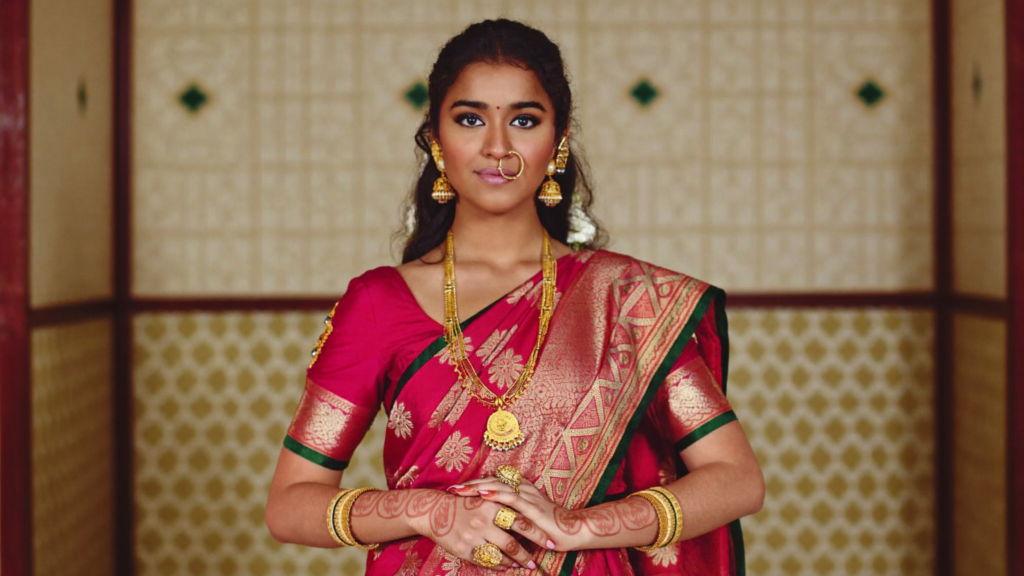
HD (High Definition) Makeup
What it is: HD makeup refers to products and techniques designed to look flawless under high-resolution cameras and 4K video. The products contain ultra-fine, light-diffusing particles that blur pores, fine lines, and texture without adding visible weight. It is applied with brushes, sponges, and sometimes stippling tools using precise layering and blending.
What it looks like: Natural, skin-like, and smooth. In person, it looks like very well-done everyday makeup. On camera, it looks flawless because the products scatter light rather than reflecting it, which prevents the “cakey” or “mask-like” effect that regular foundations can create in close-ups.
When I recommend it: For most of my brides. HD is my default technique because every Mumbai wedding now involves HD photography, 4K videography, and close-up reels. It works across all skin types when paired with the right primer and setting method. I use it for daytime ceremonies, evening receptions, and everything in between.
When I do not recommend it: There is rarely a reason to skip HD if the artist knows the technique. The only consideration is cost. HD products are more expensive than traditional products, so this does factor into pricing.
Best for: All skin types. Brides who will be extensively photographed and filmed. Both indoor and outdoor weddings.
Durability: 10 to 14 hours with proper setting.
Airbrush Makeup
What it is: Airbrush makeup uses a compressor and airgun to spray a fine mist of foundation (usually silicone-based or water-based) onto the skin. The product lands in micro-thin layers, building coverage without the texture of brush or sponge application.
What it looks like: Very smooth, even, and slightly “filtered.” The finish is porcelain-like, with a soft-focus quality. It can range from sheer to full coverage depending on how many layers are sprayed.
When I recommend it: For outdoor weddings in Mumbai’s humidity, where sweat resistance matters most. Silicone-based airbrush foundations are transfer-resistant and water-resistant, which means they hold up better than brush-applied foundations when the bride is sweating through a long outdoor ceremony. I also recommend it for brides who want an extremely even base with minimal texture visibility. You can read more about it on my airbrush makeup in Navi Mumbai page.
When I do not recommend it: For brides with very dry skin. Silicone-based airbrush formulas can accentuate dry patches and feel tight on dehydrated skin. Touch-ups are also harder with airbrush because you cannot spot-correct as easily as with traditional application. If a bride needs significant colour correction (heavy dark circles, pigmentation), I usually do the correction with traditional products and then apply the airbrush foundation on top, which adds time and complexity. You can read more about the HD vs airbrush comparison in my dedicated guide.
Best for: Oily to combination skin. Outdoor weddings. Hot and humid conditions. Long ceremonies (12+ hours).
Durability: 12 to 18 hours. The longest-lasting option available.
Matte Makeup
What it is: Matte refers to the finish, not the technique. Matte bridal makeup uses oil-control products (mattifying primer, matte foundation, setting powder) to create a shine-free, velvety surface. It is typically applied with traditional brushes and sponges.
What it looks like: Polished, refined, and completely shine-free. There is no visible luminosity or dewiness. The skin looks smooth and even with a soft, powdery quality.
When I recommend it: For brides with oily skin who produce excess sebum throughout the day. Matte finishes control oil effectively and reduce the need for frequent touch-ups. It also works well for indoor evening ceremonies where warm lighting can make dewy finishes look greasy on camera. My matte finish bridal makeup page has more on this finish.
When I do not recommend it: For brides with dry skin. A fully matte finish on dry skin looks flat, aged, and emphasises every dry patch. It also does not photograph as naturally as satin or dewy finishes in daylight. In close-up photography, fully matte skin can look “dead” because it has no light reflection. I almost always add subtle highlights on the cheekbones and nose bridge even on a predominantly matte look, to keep some dimension.
Best for: Oily skin. Indoor evening weddings. Brides who dislike any visible shine.
Durability: 10 to 12 hours with proper setting.
Dewy Makeup
What it is: Dewy makeup emphasises hydration, luminosity, and a fresh, glowing finish. It uses hydrating primers, luminous foundations, cream-based colour products, and minimal powder. The skin looks lit from within.
What it looks like: Fresh, youthful, and radiant. The skin has a visible glow and natural luminosity. Think “just came from a facial” effect rather than “fully made up.”
When I recommend it: For brides with dry or normal skin who want a romantic, natural look. Dewy makeup photographs beautifully in daylight, which makes it excellent for morning and afternoon ceremonies, outdoor mandaps, and intimate weddings. It is also the finish I default to for brides who say “I want to look like myself, just better.” If this sounds like you, see my dewy finish bridal makeup page.
When I do not recommend it: For brides with very oily skin, especially in Mumbai’s humidity. What starts as “dewy” can quickly become “oily” within 2 to 3 hours if the skin is producing its own shine on top of the luminous products. I also do not recommend a fully dewy finish for evening receptions with warm indoor lighting, where the glow can read as grease in photos. A satin finish (partway between matte and dewy) is often the better compromise.
Best for: Dry to normal skin. Morning or afternoon ceremonies. Outdoor and daylight weddings. Minimalist or natural bridal looks.
Durability: 8 to 10 hours. Slightly shorter than matte because dewy products contain fewer oil-absorbing ingredients.
Mineral Makeup
What it is: Mineral makeup is made from naturally derived minerals (zinc oxide, titanium dioxide, iron oxides) and is typically free of parabens, fragrances, and synthetic chemicals. It is usually loose powder-based, though some brands offer pressed and liquid mineral formulas.
What it looks like: Soft, natural, and lightweight. Coverage is typically light to medium. The finish is slightly luminous without being shiny.
When I recommend it: For brides with extremely sensitive or acne-prone skin who react to conventional makeup products. Mineral formulas are non-comedogenic (they do not clog pores) and are less likely to cause breakouts or irritation. I also suggest it for brides who are particular about clean or chemical-free beauty products.
When I do not recommend it: For brides who need full coverage or all-day durability in demanding conditions. Mineral makeup does not offer the same longevity or coverage as HD, airbrush, or matte formulas. It is difficult to build heavy coverage without the mineral powder looking cakey. For a 12-hour Indian wedding with extensive photography, mineral makeup alone often falls short. I sometimes use mineral products for specific elements (setting powder, blush) within an HD or traditional look if the bride has sensitivity concerns.
Best for: Sensitive or acne-prone skin. Daytime outdoor weddings. Intimate ceremonies with minimal photography. Brides who prioritise clean beauty ingredients.
Durability: 6 to 8 hours. The shortest of the bridal options.
Traditional Makeup
What it is: Traditional bridal makeup uses standard liquid, cream, or powder cosmetics applied with brushes, sponges, and beauty blenders. It is the most common application method and the one most people are familiar with. “Traditional” does not mean old-fashioned. It means the artist uses conventional application tools rather than an airbrush machine, and the products may or may not be HD-specific.
What it looks like: This depends entirely on the products chosen and the artist’s skill. Traditional makeup can produce a natural finish, a matte finish, a dewy finish, or a full-glam finish. It is the most flexible category because the outcome depends on product selection rather than a fixed technique.
When I recommend it: For brides on a tighter budget (traditional products cost less than HD or airbrush products) and for events where extreme camera performance is not the primary concern, such as a haldi, mehendi, or smaller pre-wedding function. It is also a good option for brides who want a specific, highly customised look, because traditional application gives the artist the most control over blending, layering, and correction.
When I do not recommend it: For the main wedding ceremony if the wedding involves professional HD or 4K videography. Traditional products can show texture and pores under high-resolution cameras in a way that HD products do not. For the main event, I always push brides toward HD products at minimum.
Best for: Pre-wedding functions. Budget-conscious bookings. Looks that require extensive customisation or corrective work.
Durability: 8 to 10 hours with proper setting. Less than HD or airbrush but adequate for shorter events.
Which Type Should You Choose?
The answer depends on three factors: your skin type, your wedding conditions, and your budget. Here is how I guide my brides during consultations:
Oily skin + outdoor Mumbai wedding + full-day coverage needed: Airbrush. The transfer-resistant, sweat-proof base will survive the conditions better than anything else.
Dry skin + morning ceremony + natural look desired: HD with a dewy finish. Hydrating HD products with cream-based colour products and minimal powder.
Combination skin + indoor evening reception + extensive photography: HD with a satin-matte finish. The standard recommendation for most Mumbai brides.
Sensitive skin + intimate daytime wedding + minimal photography: Mineral or traditional with gentle products. Less product, less coverage, less risk of reaction.
Multiple events across multiple days: I mix types. HD or airbrush for the main wedding and reception. Traditional for haldi and mehendi. This gives the bride the best quality where it matters most while managing the overall cost.
The bridal trial is where we test which type works on your specific skin. What sounds right in theory does not always work in practice. I have had brides who thought they wanted airbrush but preferred the feel of HD once they tried both. The trial resolves that before the wedding day. You can see how I work on my bridal makeup in Navi Mumbai page.
Frequently Asked Questions
How many types of bridal makeup are there?
There are six main types: HD (high definition), airbrush, matte, dewy, mineral, and traditional. Some describe a technique (HD, airbrush, traditional), some describe a finish (matte, dewy), and one describes a product category (mineral). They can be combined. For example, HD technique with a dewy finish, or traditional application with matte products.
Which type of bridal makeup lasts the longest?
Airbrush makeup lasts the longest, typically 12 to 18 hours. It is silicone-based and transfer-resistant. HD makeup lasts 10 to 14 hours. Matte lasts 10 to 12 hours. Dewy and traditional last 8 to 10 hours. Mineral lasts 6 to 8 hours. Durability also depends on skin prep, setting techniques, and weather conditions.
Is HD or airbrush better for bridal makeup?
Both are excellent. HD gives a more natural, skin-like finish and works well on all skin types. Airbrush gives a smoother, more “filtered” finish and lasts longer in humidity. HD is easier to touch up. Airbrush is harder to spot-correct. For most brides, I recommend HD as the default and suggest airbrush for outdoor weddings or very oily skin. Read the full comparison here.
Which bridal makeup type is best for oily skin?
Airbrush (silicone-based, transfer-resistant) or matte finish HD makeup. Both control shine effectively. Use a mattifying primer on the T-zone and set with translucent powder. Avoid dewy finishes, which combine with natural oil production to create visible shine within hours.
Which bridal makeup type is best for dry skin?
HD with a dewy or satin finish using hydrating products. Cream-based colour products instead of powders. Avoid airbrush (can feel dry), full matte (emphasises dry patches), and heavy powder mineral makeup. Skin prep with hydrating serum and rich moisturiser is essential.
Can I mix different types of bridal makeup?
Yes. I regularly combine types. Colour correction with traditional cream products, then an airbrush foundation layer on top. Or an HD base with cream (dewy) blush and highlighter and matte-set T-zone. Mixing types based on what each area of the face needs gives the best overall result. This is standard professional practice.
Book Your Bridal Makeup Trial
I offer HD and traditional bridal makeup with premium products from Charlotte Tilbury, Dior, NARS, MAC, Huda Beauty, and more. During the trial, I test which type and finish works best on your skin. Share your wedding date and I will confirm availability.
★★★★★ 5.0 on Google · 27 five-star reviews from real brides