What Is Bridal Makeup and How Is It Different from Regular Makeup?
Brides ask me this question more often than any other. They see regular makeup done at salons for parties and festivals, and they wonder why bridal makeup costs more, takes longer, and requires a separate trial. The short answer is that bridal makeup is engineered to survive your entire wedding day and look flawless in hundreds of photographs. The long answer involves differences in products, techniques, layering, skin prep, and the level of customisation involved. Let me break it all down.
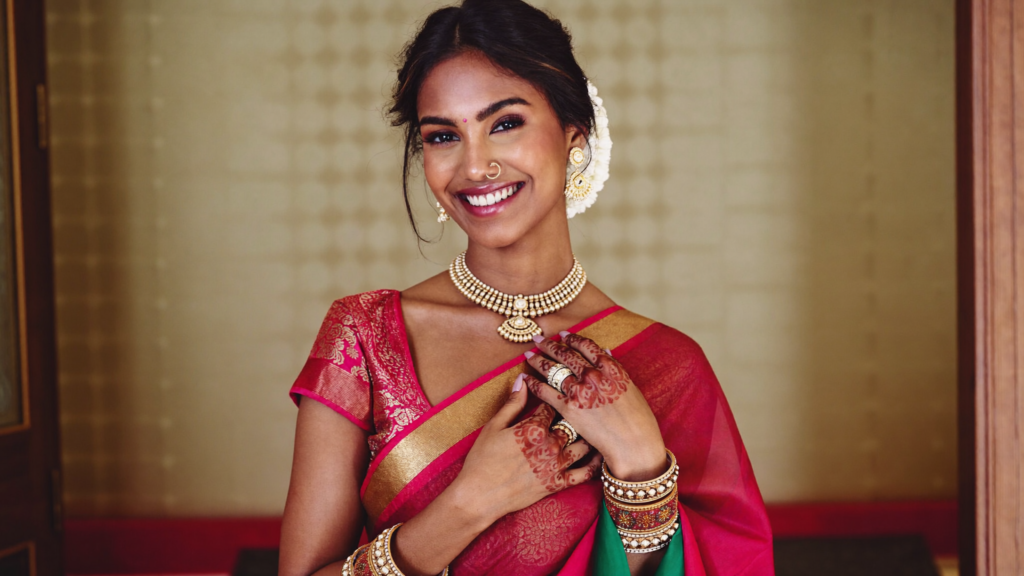
Quick answer: Bridal makeup is a multi-hour professional service built to last 10 to 12 hours and photograph flawlessly: long-wear HD products, a layered full-coverage base, plus hairstyling, draping, lashes and lenses. Regular makeup is a lighter, quicker application meant for a few hours in normal lighting. The difference shows up in the products, the time (1.5 to 2 hours vs 20 to 30 minutes) and the price.
Getting married in or around Navi Mumbai? I do half-face bridal trials free so you can test everything on your own skin before you decide. WhatsApp me to book a trial →
What Bridal Makeup Actually Involves
Bridal makeup is not a single product application. It is a multi-step, multi-hour process that starts well before the wedding day and continues until the last photo is taken. Here is what it typically includes when you book a professional bridal makeup artist:
Pre-wedding consultation. I sit with the bride (usually over WhatsApp or in person) to understand her outfit, jewellery, venue, lighting conditions, ceremony timeline, and personal preferences. A bride wearing a deep red Banarasi lehenga with kundan jewellery for an evening indoor wedding needs a completely different colour palette and finish than a bride wearing a pastel organza saree for a morning beach ceremony.
Makeup trial. This is a free half-face sitting, usually 4 to 6 weeks before the wedding, where I recreate the planned look on one half of the bride’s face. The trial lets me test foundation shades, check longevity, photograph the look under different lighting, and make adjustments. If a product creases, oxidises, or photographs poorly, I catch it here, not on the wedding day. A makeup trial is non-negotiable for bridal work. You can read more about it on my trial makeup in Navi Mumbai page.
Wedding day application. This includes skin prep (cleansing, moisturising, priming), colour correction, foundation, concealer, setting powder, contouring, blush, highlighter, eye makeup (primer, eyeshadow, liner, lashes, brows), lip makeup (liner, lipstick), and final setting with spray. I also handle hairstyling and saree or lehenga draping. The complete process takes 2.5 to 3 hours.
Touch-up support. I stay until the first set of portraits and key ceremony moments are complete. I also provide a touch-up kit with the bride’s lip shade, blotting papers, and a compact so she can maintain the look through the rest of the day.
What Regular Makeup Involves
Regular makeup, whether for a party, a festival, an office event, or a family function, is a simpler process with a shorter lifespan expectation. Here is what it typically looks like:
Application time: 30 to 60 minutes. There is no trial, no pre-consultation about venue lighting, and no customisation to outfit colours.
Products: Everyday or mid-range products. Coverage is usually light to medium. The goal is to look polished, not to survive 12+ hours of ceremonies, hugs, tears, and flash photography.
Techniques: Simpler blending, less layering, no colour correction (unless specifically requested), and minimal contouring. The base is typically one layer of foundation applied quickly.
Durability: 3 to 5 hours. Regular makeup is designed to look good for an evening out or a few hours at an event. It is not built to withstand humidity, sweat, long ceremonies, or extensive flash photography.
The Real Differences: Product by Product
The gap between bridal and regular makeup is not about “more makeup.” It is about different products, applied with different techniques, for different performance requirements. Here is where the differences sit:
Primer. Regular makeup may skip primer entirely or use a basic moisturiser as a base. Bridal makeup uses a dedicated primer selected for the bride’s skin type: mattifying for oily skin, hydrating for dry skin, pore-filling for textured skin. The primer creates a barrier between skincare and makeup that extends wear time by hours.
Foundation. Regular makeup uses a single layer of everyday foundation. Bridal makeup uses professional-grade, long-wear foundations (brands like MAC, Dior, or Estee Lauder) applied in thin, buildable layers. The foundation is matched to the bride’s exact undertone and tested under flash to ensure no white cast or oxidation. I avoid SPF in bridal foundation because it causes flashback in photographs.
Colour correction. Regular makeup rarely includes this step. Bridal makeup uses colour correctors (peach or orange for dark circles, green for redness) before concealer to neutralise pigmentation. This is one of the most important techniques for Indian skin tones because it reduces the amount of concealer needed and prevents a heavy, cakey under-eye area.
Concealer. Regular makeup may use concealer under the eyes. Bridal makeup uses high-coverage, long-wear concealer on dark circles, blemishes, redness, and any areas that need extra correction. It is set with translucent powder to prevent creasing.
Setting. Regular makeup may use a light dusting of powder or no setting at all. Bridal makeup uses a strategic combination: translucent setting powder on the T-zone and under-eyes, followed by a long-wear setting spray. In Mumbai’s humidity, I also use the cream-then-powder layering method where I apply cream products (blush, contour) first, set with powder, then add powder products on top. This creates a durable base that resists sweat and moisture for 10 to 14 hours.
Eye makeup. Regular eye makeup is typically one or two eyeshadow shades with mascara and perhaps a simple liner. Bridal eye makeup involves an eye primer, multiple layered eyeshadow shades with careful blending (transition shade, crease colour, lid colour, highlight), waterproof liner, waterproof mascara, and false lashes. Everything is waterproof because weddings involve tears, and nothing ruins a bridal photo faster than mascara tracks.
Lip makeup. Regular lip makeup is a single application of lipstick or gloss. Bridal lip makeup involves lip exfoliation (during skin prep), a full lip liner base, two layers of long-wear lipstick with blotting between layers, and a touch-up shade provided to the bride. This double-layer technique ensures the colour survives eating, drinking, and the full ceremony.
Why Bridal Makeup Needs to Survive the Camera
This is the single biggest difference that brides often underestimate. Your wedding day will be the most photographed day of your life. You will be shot in natural daylight during morning rituals, under warm tungsten lights during indoor ceremonies, and under harsh flash during evening receptions. A good bridal makeup job looks flawless across all these conditions.
Regular makeup is not designed for this. Everyday foundation can look patchy or textured in high-resolution close-ups. Regular concealer creases within hours under flash. Shimmer that looks pretty in person can blow out as a white blob in flash photography. Glitter fallout from regular eyeshadow creates sparkly specks all over the cheeks in photos.
This is why I use HD or airbrush techniques for bridal work. HD products contain light-diffusing particles that blur texture and imperfections under high-resolution cameras. Airbrush foundations spray on in micro-thin layers that look like real skin on camera. These techniques do not exist in regular makeup applications. You can read about my airbrush makeup in Navi Mumbai on its own page.
During the trial, I always take photos of the finished half-face look on my phone under both natural light and flash. This is how I verify that the base does not flashback, the contour reads correctly on camera, and the eye makeup holds definition from a distance. This camera-testing step is part of professional bridal makeup and does not happen with regular makeup.
The Time Difference
Regular makeup at a salon takes 30 to 60 minutes. You sit down, the artist applies products, and you leave. There is minimal customisation.
Bridal makeup on the wedding day takes 2.5 to 3 hours. This includes 15 to 20 minutes of skin prep, 30 to 40 minutes of base work (correction, foundation, concealer, setting), 30 to 40 minutes of contouring, blush, and highlighter, 30 to 45 minutes of eye makeup and brows, 10 to 15 minutes of lip makeup, and 10 to 15 minutes of final setting, touch-ups, and camera checks. If hairstyling is included, add another 45 minutes to an hour depending on complexity.
This time investment is not about going slow. It is about building layers correctly, allowing each layer to set before adding the next, and checking the look from multiple angles and lighting conditions. Rushing bridal makeup leads to creasing, patchy blending, and looks that break down within hours.
The Cost Difference and Why It Exists
Regular party makeup in Mumbai typically costs ₹2,000 to ₹5,000. Bridal makeup ranges from ₹15,000 to ₹50,000 or more depending on the artist’s experience and the products used.
The price difference reflects several real costs that do not exist in regular makeup:
Premium products. A single bridal look uses ₹3,000 to ₹5,000 worth of professional-grade products. The foundation, concealer, setting powder, eyeshadows, and lipsticks I use for bridal work are significantly more expensive than salon-grade products. These products perform better under camera, last longer, and feel more comfortable on the skin.
Trial session. The trial is a separate half-face sitting that I prepare for and execute before the wedding day, and I do it free. This is time and product investment that regular makeup does not require.
Consultation and planning. Understanding the bride’s outfit, jewellery, venue lighting, ceremony timeline, and skin type takes time. I spend 30 to 60 minutes on pre-wedding consultation before the trial even happens.
On-site time. I arrive at the bride’s location (typically her home), set up my full kit, work for 2.5 to 3 hours, and stay through the initial photography. That is 4 to 5 hours of dedicated on-site time per wedding. Regular makeup is a 45-minute salon visit.
Travel and logistics. For home visits and destination weddings, travel time, fuel, and sometimes accommodation are factored into bridal pricing. This does not apply to walk-in salon makeup.
When brides ask me why bridal makeup is more expensive, I explain that they are not paying for more makeup. They are paying for better products, more time, more expertise, and a guarantee that the look will hold up through the most photographed day of their life. You can see what is included in my bridal makeup service.
When Regular Makeup Is Enough
I do not believe every occasion needs bridal-level makeup. For events like haldi, casual sangeet, office parties, birthday celebrations, and family dinners, regular professional makeup is perfectly appropriate. Save the full bridal treatment for the main wedding ceremony and reception where the photography is extensive and the wear time is longest.
Some brides book me for party makeup for their pre-wedding events and reserve the full bridal package for the wedding day itself. This is a practical way to manage your budget while still looking polished at every function.
Frequently Asked Questions
What is bridal makeup?
Bridal makeup is a professional, multi-step makeup application designed specifically for the wedding day. It includes a pre-wedding consultation, a trial session, premium long-wear products, colour correction, HD or airbrush techniques, waterproof eye and lip products, and strategic setting for 10 to 14 hour durability. It also includes hairstyling, draping, and a touch-up kit.
How is bridal makeup different from regular makeup?
Bridal makeup uses professional-grade, long-wear products applied in multiple thin layers with techniques like colour correction, cream-then-powder layering, and camera testing. Regular makeup uses everyday products in a single layer with simpler techniques. Bridal makeup lasts 10 to 14 hours. Regular makeup lasts 3 to 5 hours. Bridal makeup includes a trial and customisation to outfit, lighting, and skin type. Regular makeup does not.
Why does bridal makeup take so long?
Bridal makeup takes 2.5 to 3 hours because it involves skin prep, colour correction, layered foundation application, strategic setting, detailed eye makeup with multiple shades and lashes, lip layering, and camera testing. Each step needs time to set before the next layer is applied. Rushing creates creasing, patchy blending, and shorter wear time.
Why is bridal makeup more expensive than regular makeup?
The cost reflects premium products (₹3,000 to ₹5,000 per look), a separate trial session, pre-wedding consultation, 4 to 5 hours of on-site time, travel to the bride’s location, and the expertise required to create a camera-proof look that lasts all day. Regular makeup uses less expensive products and takes 30 to 60 minutes at a salon.
Do I need a trial before my wedding?
Yes. A bridal makeup trial is essential. It lets the artist test foundation shades on your skin, check longevity, photograph the look under different lighting, and make adjustments. Issues like oxidation, flashback, or creasing are caught during the trial and corrected before the wedding day. Without a trial, you are taking an unnecessary risk.
Can I use regular makeup for my wedding?
You can, but the results will not match professional bridal makeup in terms of longevity, photography performance, or comfort over a long day. Regular makeup fades, creases, and photographs differently under flash. For pre-wedding functions where the stakes are lower, regular professional makeup is fine. For the main wedding ceremony and reception, invest in proper bridal makeup.
Book Your Bridal Makeup
My bridal package includes a consultation, wedding day HD makeup, hairstyling, saree or lehenga draping, lashes, accessories, and a touch-up kit. The half-face trial is free. I use products from Charlotte Tilbury, Dior, NARS, MAC, Huda Beauty, Hourglass, Laura Mercier, Rare Beauty, and Estee Lauder. Share your wedding date and I will confirm availability.
★★★★★ 5.0 on Google · 27 five-star reviews from real brides