What Is the Difference Between North Indian vs South Indian Bridal Makeup?
Navi Mumbai is one of the most culturally mixed cities in India. In a single month, I work on Punjabi brides in red lehengas, Maharashtrian brides in nauvari sarees, Tamil brides in Kanjeevaram silk, and Kerala brides in kasavu mundu. Each tradition has a distinct approach to bridal beauty, and the makeup needs to respect that. The biggest distinction I see in my work is between North Indian and South Indian bridal styles. They differ in almost everything: the base finish, the eye approach, the lip palette, the hair, and the way makeup interacts with jewellery and outfit. Here is how I approach both, and where modern brides are blending the two.
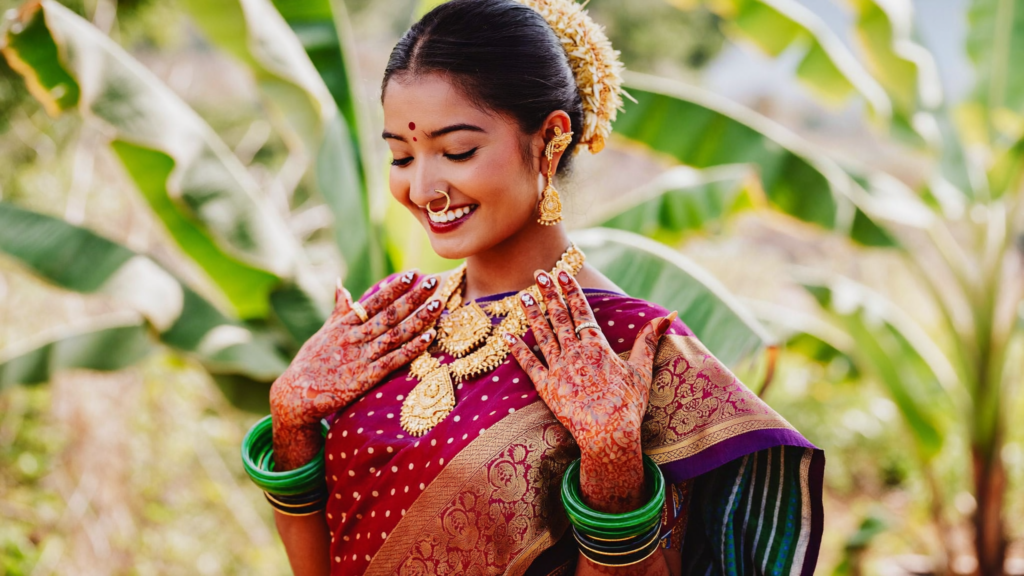
The Core Philosophy Behind Each Style
Before getting into product-level details, it helps to understand what each tradition is trying to achieve. The intent shapes every technique decision.
North Indian bridal makeup draws from Mughal, Rajasthani, and Punjabi aesthetics. It is opulent, defined, and designed to make the bride the visual centre of a large, elaborate celebration. The look is typically full-glam: sculpted contour, dramatic eyes, bold lips, and a radiant base. The makeup is expected to hold its own against heavy lehengas, layered jewellery, and dramatic venue decor.
South Indian bridal makeup is rooted in temple traditions and classical beauty. It celebrates the bride’s natural complexion, pairs makeup with heavy gold jewellery and richly coloured silk, and prioritises warmth and glow over sculpted drama. The look is polished and refined, but it is designed to enhance rather than transform. The outfit and jewellery carry as much visual weight as the makeup. If you want this look, you can read about my South Indian bridal makeup in Navi Mumbai.
Base and Skin Finish
North Indian approach: I build a more sculpted, defined base. The foundation is medium to full coverage, with a satin-matte or HD matte finish. Contouring is more pronounced, highlighting is stronger, and the base is designed to create a sharp, camera-ready appearance. Baking (setting concealer with powder for several minutes) is common under the eyes and along the jawline to create crisp definition. The overall effect is polished and editorial.
South Indian approach: I keep the base lighter and more breathable. The foundation is medium coverage with a satin or natural finish. Contouring is subtle, focused on soft cheekbone definition rather than dramatic sculpting. I use cream-based products more heavily here because they sit naturally on the skin and give the warmth and glow that South Indian bridal looks depend on. Heavy contouring would clash with the aesthetic. The goal is skin that looks healthy and luminous, not heavily made up.
Why this matters: South Indian wedding ceremonies are often longer (sometimes 3 to 5 hours of continuous rituals) and frequently held in the morning or afternoon in warmer conditions. A lighter base survives better in those conditions. North Indian ceremonies vary more in timing but usually involve extensive indoor photography with flash, where a more sculpted base reads better on camera.
Eye Makeup
This is where the two styles diverge most visibly.
North Indian bridal eyes are typically the focal point of the entire look. I create bold, defined eye makeup: layered eyeshadow with a deep crease colour, shimmer or metallic on the lid, a strong winged liner, and full false lashes. Smoky eyes are common, ranging from warm brown smoky to deep black-and-gold combinations. The brow is sharply defined and arched. Glitter accents on the centre lid or inner corner are popular for evening receptions.
South Indian bridal eyes are expressive but not overpowering. Kohl (kajal) is the defining element. I apply kohl deeply along both the upper and lower waterline, then smudge the lower line slightly for a soft, traditional effect. Eyeshadow is warm-toned (golds, bronzes, warm browns) and less heavily layered than in North Indian looks. The liner is typically closer to the lash line rather than a dramatic wing. Lashes are natural to medium volume, not the full-strip dramatic lashes I use for North Indian brides.
The reason is practical as well as aesthetic. South Indian brides wear maang tikkas, matha pattis, or nethi chutti (forehead jewellery) that sit close to the brow line. Heavy, dark eye makeup combined with heavy forehead jewellery can make the upper face look crowded. Keeping the eyes warm and defined rather than dramatic ensures balance.
Lip Colours
North Indian bridal lips are a statement. Deep reds, maroons, berry pinks, and wine shades dominate. The lip is lined precisely, filled with two layers of long-wear lipstick, and often finished with a clean edge using concealer. The lip colour is chosen to complement the lehenga, which is frequently red, maroon, or deep pink. Matte or creamy-matte finishes are standard.
South Indian bridal lips sit within a warmer palette. Brick red, warm coral, burnt orange, rust, and orange-based reds are the traditional choices. These shades complement the golden tones of Kanjeevaram silk and temple jewellery. The finish is often satin rather than fully matte, giving a natural richness. The lip is defined but not as sharply lined as in North Indian looks.
When I choose lip colours for South Indian brides, I always swatch against the saree fabric because Kanjeevaram silks have very specific colour undertones (a maroon Kanjeevaram has a different base than a maroon velvet lehenga). A lip colour that looks perfect on its own can clash when placed next to the saree border at the shoulder, which is exactly where it shows up in close-up bridal portraits.
Blush and Highlighter
North Indian: Blush is typically rose, coral, or peach-pink, applied with a defined sweep along the cheekbone. Highlighter is prominent on the cheekbones, nose bridge, and cupid’s bow, creating visible dimension. The overall effect is sculpted and luminous.
South Indian: Blush is warmer, usually soft apricot, warm terracotta, or a muted peach that adds colour without obvious placement. Highlighter is subtle or gold-toned, applied sparingly on the cheekbones. The glow comes more from the base finish and cream products than from a distinct highlighter stripe. On deeper South Indian skin tones, I often skip powder highlighter entirely and use a gold-toned cream highlight that melts into the skin for a natural sheen.
Hair and Accessories
North Indian bridal hair is typically styled in elegant updos, voluminous buns, or soft waves. Maang tikka (centre parting jewellery), matha patti (headchain), and sometimes a passa (side ornament in Mughal-inspired looks) are common. The dupatta is draped over the head in various styles. Hair extensions or padding are frequently used to add volume to the bun. I coordinate with the hairstyle to ensure the dupatta sits properly and the jewellery is balanced.
South Indian bridal hair traditionally involves a long braid adorned with fresh flowers, usually jasmine (gajra). The braid may be decorated with a jadanagam (serpent-style gold hair ornament) or gold-threaded accessories. Fresh flower arrangements are significant and are coordinated with the bride’s family. Some South Indian brides opt for a bun adorned with flowers instead of a braid. The parting is typically centre, with the nethi chutti placed at the hairline.
The hair approach affects makeup decisions. A South Indian bride with a heavy flower arrangement and prominent forehead jewellery needs the makeup to stay in a complementary, supporting role rather than competing for attention. A North Indian bride with a minimal dupatta drape and statement maang tikka has more room for the makeup itself to be dramatic.
Jewellery and Outfit Coordination
North Indian jewellery is typically kundan, polki, or meenakari work in gold and stone combinations. The colours in the jewellery can include green, red, pink, and pearl white. I consider these colours when choosing eyeshadow and lip tones. A bride wearing a green-accented kundan set with a red lehenga needs her eye and lip tones to tie everything together without adding a fourth competing colour.
South Indian jewellery is predominantly yellow gold temple jewellery: heavy necklaces, jhumkas (earrings), vaddanam (waist belt), and arm bands. The gold is the dominant colour, which is why I lean heavily into gold-toned makeup: gold eyeshadow, gold highlighter, warm-toned everything. Cool-toned makeup next to heavy yellow gold jewellery creates a visual disconnect that is immediately noticeable in photographs.
Where Modern Brides Blend Both Styles
An increasing number of my brides in Navi Mumbai want elements from both traditions. A Tamil bride may ask for a more sculpted contour and dramatic eye typical of North Indian style while keeping the traditional jasmine braid and Kanjeevaram saree. A Punjabi bride may request a softer, more natural base inspired by South Indian bridal aesthetics while wearing a classic red lehenga. If you are planning bridal makeup in Navi Mumbai with a fusion look in mind, I am happy to talk it through.
This fusion is the reality of modern Indian bridal makeup. I approach it by keeping the base and colour palette consistent with the dominant tradition (whichever style the outfit and jewellery represent) and then incorporating specific technique elements from the other style. For example, a South Indian bride who wants more eye drama gets a warmer version of a smoky eye built with bronze and gold rather than black and silver, maintaining the warmth of South Indian aesthetics while adding the definition of North Indian eye techniques.
The one rule I follow in fusion looks is to never let the makeup fight the outfit. If the outfit is traditionally South Indian, the colour palette stays warm and gold-based even if the techniques borrow from North Indian styles. If the outfit is North Indian, the base can be lighter and more natural while the eye and lip intensity stays at the level the outfit demands. My other community looks have their own pages: Maharashtrian bridal makeup, Muslim bridal makeup and Christian bridal makeup.
A Quick Reference
Base finish: North Indian uses satin-matte with pronounced contouring. South Indian uses satin-natural with soft contouring.
Eyes: North Indian focuses on dramatic shadow, winged liner, full lashes. South Indian focuses on deep kohl, warm-toned shadow, natural lashes.
Lips: North Indian uses deep reds, maroons, berries with sharp definition. South Indian uses brick red, warm coral, rust with softer edges.
Blush: North Indian uses rose or peach with defined placement. South Indian uses warm apricot or terracotta with blended placement.
Highlighter: North Indian uses prominent champagne or gold on cheekbones. South Indian uses subtle gold-toned cream highlight.
Hair: North Indian uses updos, buns, waves with tikka and dupatta. South Indian uses braids with jasmine flowers and temple ornaments.
Jewellery influence: North Indian makeup coordinates with multi-coloured kundan or polki. South Indian makeup coordinates with yellow gold temple jewellery.
Frequently Asked Questions
What is the main difference between North Indian and South Indian bridal makeup?
North Indian bridal makeup is more sculpted and dramatic: full-coverage base, bold eyes with winged liner and lashes, deep lip colours, and pronounced contouring. South Indian bridal makeup is warmer and more natural: lighter base, kohl-defined eyes with warm shadow tones, brick or coral lip colours, and subtle contouring. The outfit and jewellery tradition drives these differences.
Can I mix North Indian and South Indian bridal makeup styles?
Yes. Many modern brides blend elements from both. The key is to keep the colour palette consistent with the dominant tradition (based on outfit and jewellery) and incorporate specific techniques from the other style. For example, a South Indian bride can have more dramatic eyes using bronze and gold tones rather than cool black smoky shades.
Which bridal makeup style lasts longer in Mumbai’s humidity?
Both can last equally long with the right products and techniques. South Indian bridal makeup’s lighter base can actually hold up better in extreme heat because there is less product to break down. North Indian full-coverage looks need stronger setting (mattifying primer, setting spray, powder) to survive humidity. I adjust the technique based on the venue and time of day regardless of style.
What eye makeup works best for a South Indian bride?
Deep kohl along both waterlines, warm eyeshadow in gold, bronze, or warm brown, a liner close to the lash line (not a dramatic wing), and natural to medium-volume lashes. The eyes should be expressive but not overpower the forehead jewellery and flower arrangement that are central to the South Indian bridal look.
What lip colour suits a North Indian bride?
Deep reds, maroons, wine, berry pink, and classic red with warm undertones are the traditional choices. The lip colour should complement the lehenga. For a red lehenga, a warm red or deep berry. For a pastel or ivory lehenga, a softer rose or nude pink. Matte or creamy-matte finishes are standard for durability.
Do you do both North Indian and South Indian bridal makeup?
Yes. I work with brides from all communities across Navi Mumbai and Mumbai. I customise every look based on the bride’s tradition, outfit, jewellery, skin tone, and personal preferences. During the trial, I build the look specific to your ceremony style and test it under your venue’s lighting conditions.
Book Your Bridal Makeup
Whether your wedding is North Indian, South Indian, Maharashtrian, or a fusion of traditions, I customise every look to your outfit, jewellery, and personal style. Share your wedding date, ceremony type, and outfit details and I will confirm availability.
★★★★★ 5.0 on Google · 27 five-star reviews from real brides